
Every team looks strong when conditions are good. The real test arrives with the difficult quarter: the restructure, the lost client, the impossible deadline, the key person who resigns mid-project. Some teams absorb the hit, adapt and come back sharper. Others fracture: energy drops, blame circulates, good people quietly start updating their CVs.
The difference between those two outcomes is resilience, and here is the most important thing to know about it: resilience is not a personality trait that teams either have or lack. It is a capability that can be deliberately built. This guide explains what team resilience is actually made of, why so many companies get it wrong, and how to build it systematically using two tools that work far better together than apart: coaching and workplace wellness.
What Team Resilience Actually Is (and Is Not)
Resilience is often misunderstood as toughness: the ability to keep going no matter what. That definition quietly does enormous damage, because “keep pushing” without recovery is not resilience. It is slow-motion burnout with better branding.
Real resilience is closer to what engineers mean by the word: the capacity to bend under load without breaking, and to return to form afterwards. For a team, that means three abilities:
- Absorb pressure without dysfunction. During high-demand periods, the team keeps communicating, prioritizing and supporting each other instead of descending into panic, silence or conflict.
- Adapt when the plan breaks. The team can change course quickly, make decisions with incomplete information and let go of work that no longer matters, without needing weeks to grieve the old plan.
- Recover deliberately. After the crunch, the team actually restores its energy, learns from what happened and returns to baseline, rather than rolling permanently exhausted into the next crisis.
Notice that the third ability is the one most teams skip, and its absence is why so many formerly great teams degrade over time. Pressure is unavoidable in any ambitious company, especially in a market as fast-moving as the UAE. Unrecovered pressure is a choice.
Why Resilience Lives at Two Levels
Here is where most resilience initiatives fail: they treat resilience as an individual issue and hand employees an app, a webinar or a wellness allowance. Individual tools matter, but a team is not just a collection of individuals. Resilience lives at two levels, and both must be built:
The individual level is physiological and psychological: each person’s ability to regulate stress, maintain energy, sleep well and keep perspective under pressure. A team of dysregulated, exhausted individuals cannot be resilient no matter how good its processes are.
The collective level is behavioral and cultural: how the group communicates under pressure, whether people flag problems early, how conflict is handled, whether workload is visible and shared, and what the leader models when things go wrong. A group of individually resilient people can still be a fragile team if the culture punishes honesty or glorifies overwork.
This two-level structure explains the title of this article. Workplace wellness practices build the individual level. Coaching builds the collective level. Companies that invest in only one keep wondering why the results do not hold.
Building the Individual Level: Wellness That Actually Works
Forget the fruit basket. The wellness practices that build genuine stress-resilience share one feature: they train the nervous system, rather than just distracting the mind. The most effective, in rough order of impact per minute invested:
Breath regulation skills
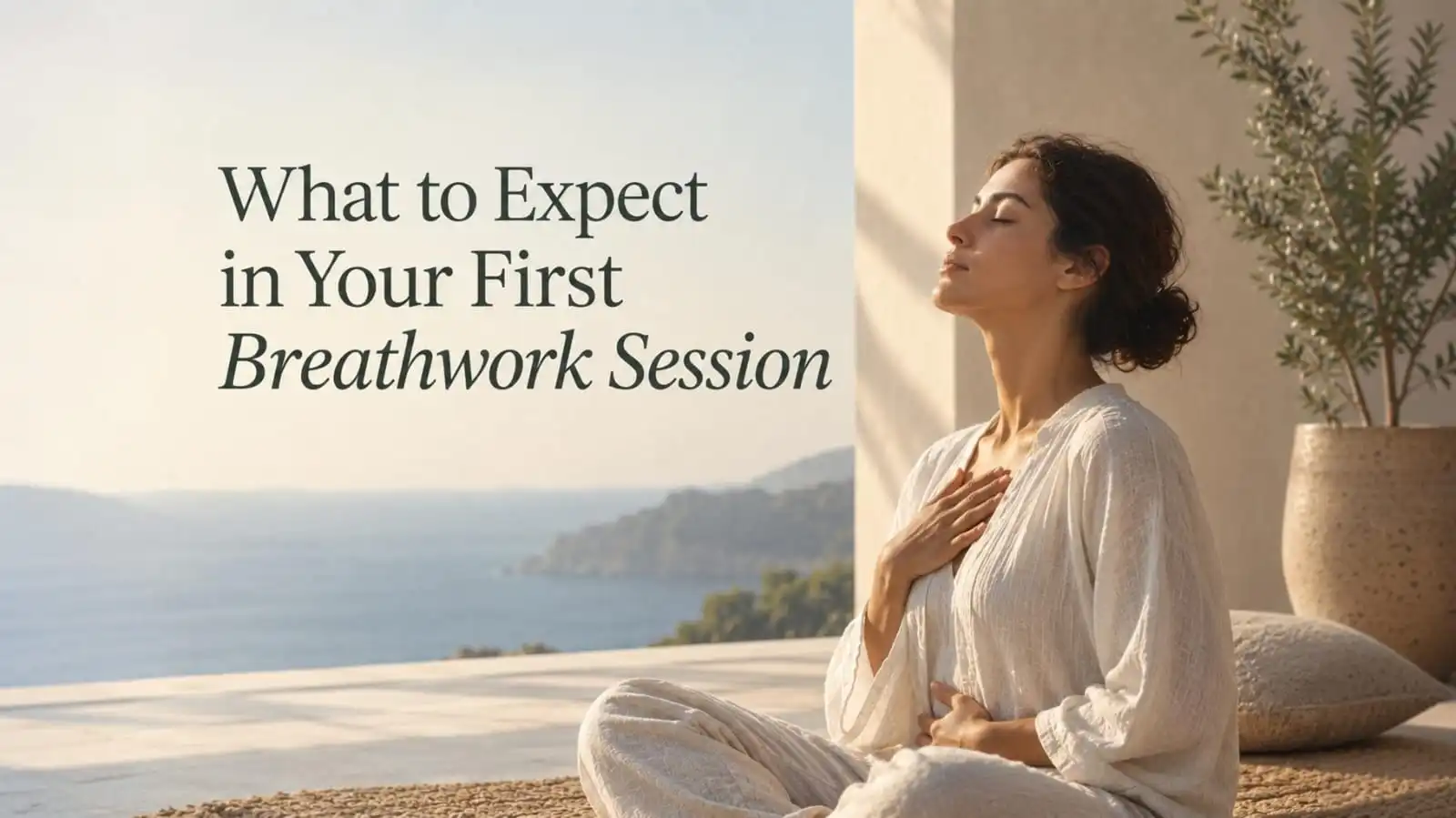
The fastest resilience skill a workforce can learn. Slow, controlled breathing with extended exhales shifts the nervous system out of fight-or-flight within minutes, measurably lowering heart rate and stress arousal. Taught in a single guided session and practiced briefly each day, it gives every team member a portable tool that works at their desk, before a difficult call or in the middle of a crunch. Deeper facilitated practices such as Transformational Breath® go further, releasing the accumulated tension and restricted breathing patterns that chronic pressure builds up over months and years.
Energy management, not time management
Resilient performers work in waves: focused effort followed by genuine recovery. Teams can be taught to structure their days around this rhythm: protecting deep-work blocks, taking real breaks rather than screen-swaps, and treating the hour before sleep as recovery infrastructure. Small habits, compounded across a team, change what the group can sustain.
Early-warning awareness
Burnout is a slow slide, and the person sliding is usually the last to notice. Teaching teams the early signals (persistent exhaustion, growing cynicism, declining sense of accomplishment) turns colleagues into an early-warning network, so intervention happens months before resignation letters do.
Building the Collective Level: What Coaching Changes
The collective level cannot be fixed with a workshop slide that says “communicate better”. It changes when the team’s actual habits change, and that is coaching territory.
Leaders learn to model resilience, not demand it
Teams calibrate to their leader under pressure. A leader who panics, blames or disappears teaches the team to do the same; a leader who stays regulated and honest teaches the opposite. Leadership coaching works directly on this: helping leaders notice their stress patterns, regulate in real time and respond to bad news in ways that keep information flowing. Nothing builds or destroys team resilience faster than how the leader receives a problem.
The team builds psychological safety
Resilient teams surface problems early, and people only do that when raising a concern is safe. Team coaching sessions create structured practice: surfacing unspoken tensions with a facilitator present, agreeing how disagreement should work, and normalizing honest status reports. Over a few sessions, “everything is fine” culture gives way to “here is what I am worried about” culture, and problems start arriving while they are still small.
Pressure gets a protocol
Fragile teams improvise under pressure; resilient teams have agreements. Good team coaching helps a group define its crunch-mode protocol in calm times: what gets deprioritized, how decisions accelerate, how workload gets rebalanced when someone is overloaded, and, critically, how recovery is scheduled after the push. Writing these agreements when nobody is stressed means they hold when everybody is.
Setbacks become learning instead of blame
The defining moment for team resilience is the aftermath of failure. Coached teams learn to run honest, blame-free reviews: what happened, what the system (not the scapegoat) allowed, what changes next time. Teams that learn from setbacks compound; teams that hide from them repeat.
A Practical 90-Day Sequence
For a company in Dubai or the wider UAE wanting to build this deliberately, a realistic sequence looks like this:
- Weeks 1 to 2: Baseline. Run a short anonymous pulse survey on stress, energy and safety-to-speak. You cannot build resilience you do not measure.
- Weeks 2 to 4: Start with the leader. Begin leadership coaching for the team’s manager, focused on stress regulation and pressure behavior. The leader moves first; everything else lands better afterwards.
- Weeks 4 to 6: Team wellness foundation. A guided team breathing and stress-management session, teaching the individual regulation skills everyone will use daily. Follow with short weekly resets, five minutes at the start of a recurring meeting is enough to maintain the habit.
- Weeks 6 to 10: Team coaching. Two or three facilitated sessions to build the collective agreements: how the team communicates under pressure, its crunch protocol and its review habit.
- Weeks 10 to 13: Embed and remeasure. Repeat the pulse survey, compare against baseline, and lock the rhythms that worked into the team’s calendar: monthly wellness sessions, quarterly team coaching, reviews after every major push.
Note: Plans may vary depending on the company’s needs.
This sequence deliberately alternates levels: individual, collective, individual, collective. Each layer reinforces the other, which is why the combination outperforms either approach alone.
The Payoff: What Resilient Teams Do Differently
Companies that make this investment see the difference precisely where it matters most:
- Problems surface weeks earlier, while they are still cheap to fix.
- High-pressure periods produce focused effort instead of chaos, and the team is functional again days after the push, not months.
- Sick days and quiet disengagement decline, because stress is discharged instead of accumulated.
- Retention improves, particularly among top performers, who are always the first to leave a fraying team.
- Change, reorganizations, new tools and shifting priorities get absorbed faster, which in a market that moves at UAE speed is a genuine competitive advantage.
Build the Capacity Before You Need It
The worst time to build resilience is during the crisis that demands it. Like fitness, it has to be developed in advance and maintained in rhythm, and the tools are well understood: wellness practices that train each individual nervous system, and coaching that trains the team’s collective behavior. Neither is expensive compared to the cost of a burned-out, fractured team. Both are entirely learnable.
- At S Motion, we help organizations across Dubai and the UAE build resilient teams through ICF-certified leadership and team coaching, Transformational Breath® sessions and corporate stress-management workshops, delivered on-site or online, in English and Arabic. Programs can start with a single session for one team and expand from there.
Talk to S Motion about building resilience in your team
Frequently Asked Questions
How is team resilience different from individual resilience?
Individual resilience is each person’s capacity to handle stress and recover. Team resilience is the group’s ability to keep functioning under pressure: communicating, adapting and supporting each other. A team can contain resilient individuals and still be fragile if its culture suppresses honesty or ignores recovery. Building both levels together is what produces lasting results.
How long does it take to build a more resilient team?
First effects appear quickly: a single breathing session gives people a usable regulation tool the same day. Cultural changes, such as earlier problem-raising and healthier pressure behavior, typically become visible within one quarter of consistent coaching and practice, which is why a sequence of sessions over 90 days or less is a realistic starting point.
Can resilience training prevent burnout?
It is one of the most effective preventions available. Burnout develops when chronic pressure meets absent recovery, so teams that learn stress regulation, schedule genuine recovery and surface overload early interrupt the burnout cycle at every stage. Prevention costs minutes per day; recovering a burned-out employee takes months.
Does this work for remote and hybrid teams?
Yes. Coaching sessions, breathing sessions and team workshops are all highly effective in virtual settings. In fact, hybrid and distributed teams often benefit the most, as distance can make it harder to notice early signs of stress and reduces the informal support that naturally exists in shared workplaces. S Motion delivers programmes both on-site across the UAE and online, making it easy to support teams wherever they are.
What is the best first step for a small company without a wellness budget?
Start with one guided team session combining breathing and stress-management skills. It is low-cost, requires no ongoing platform subscription, gives every team member an immediately usable tool and shows leadership visible results within a single meeting. Contact S Motion to arrange a session for your team.