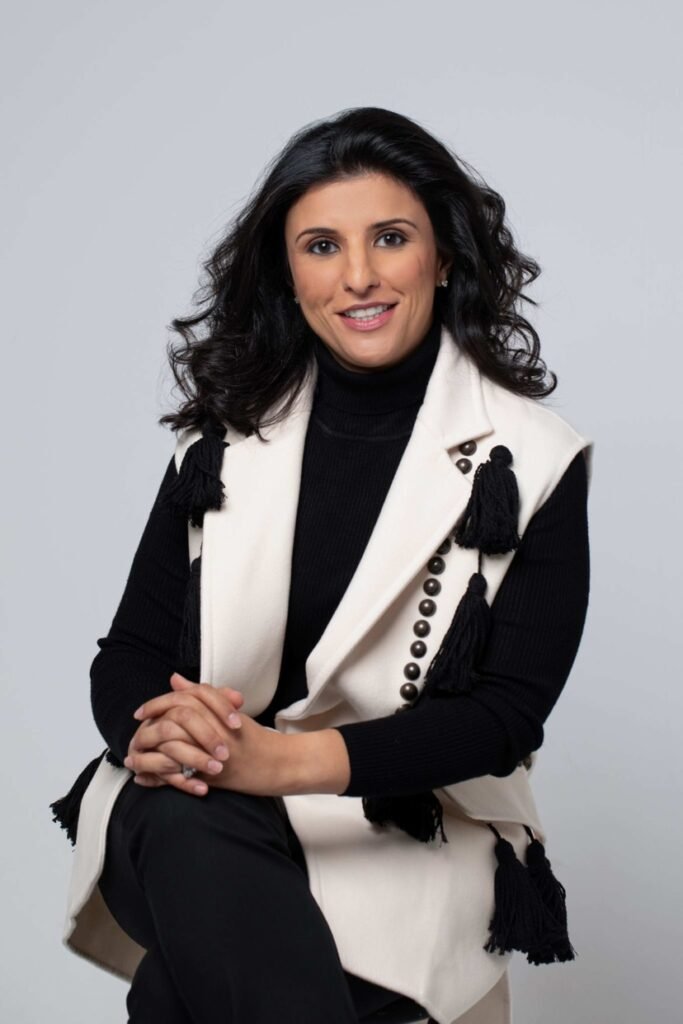
Breathwork programs for children (ages 0–12) and their parents, guided by Fatemah AlMarzook — ICF certified professional coach and Transformational Breath® facilitator. Build life skills, self-confidence and calmer communication across the whole family — in Dubai , in English and Arabic.
Content reviewed by Fatemah AlMarzook, Transformational Breath® Facilitator & ICF Certified Professional Coach
Sound familiar?
Watch a child in the middle of a meltdown and you’ll see it before you hear it — the chest goes tight and high, the breath turns fast and shallow, the words stop working. Every parent knows that moment. Nobody hands a child the one tool that reaches their body faster than any explanation: the breath. If any of these sound like your home, breathing is the place to start:
None of this means something is wrong with your child — or with you. If your child is struggling with big emotions, a breathwork session can be a gentle place to start.
Kids breathwork is simply teaching children how to use their own breath on purpose. Not sitting still with their eyes closed for twenty minutes — that’s not how a six-year-old works. It looks like balloons in the belly, bumblebee humming, blowing invisible feathers across the room, breathing a star shape with their fingers. Underneath the play, your child is learning one real skill: I can change how my body feels.
And because a child borrows calm from the adult beside them, the parent is never a spectator. Parenting breathwork gives you your own breath back — the two-breath reset before you answer, the practice that keeps your voice steady when theirs isn’t. That pairing is the whole point of a kids & parenting breathing program: the child learns the tool, the parent learns to hold the room, and the calm becomes something the family does together rather than something you keep asking for.
At S Motion these sessions are led by an internationally certified Transformational Breath® facilitator who is also an International Coaching Federation (ICF) certified coach. That matters for a page like this one: breathwork is unregulated, and children deserve someone with accredited training, supervised practice and a professional code of ethics — not a technique picked up from a video.
This is the distinction most parents ask about first. Adult Transformational Breath® uses a connected, active breathing pattern that can surface strong emotion — powerful, and entirely appropriate for grown-ups who choose it. Children’s sessions are not that. Kids breathe slowly, naturally and gently: full belly breaths, long soft out-breaths, humming and blowing. No forced pace, no long holds, no pushing. The child sets the speed, and stopping is always allowed.
An honest note that matters: breathing sessions support your child’s wellbeing, calm and emotional skills — they do not replace medical or psychological care. If your child has a specific condition, tell us before the session so the practice can be adapted safely, and we’ll refer you to a licensed specialist whenever that’s the right path.
In the middle of a meltdown, the thinking part of your child’s brain has effectively gone offline. Their body is in fight-or-flight: heart racing, muscles braced, breath fast and high in the chest. This is why “calm down” and “use your words” land on nobody — there is no one home to hear them yet. The body has to settle before the child can think.
Breathing is the one part of that stress response a child can take hold of directly. Slow breathing low into the belly, with an out-breath longer than the in-breath, shifts the nervous system toward its calming, parasympathetic side: heart rate eases, shoulders drop, the flood recedes. Then — and only then — a conversation becomes possible. Health services teach the same principle to adults; the NHS breathing exercises for stress rest on exactly this longer-exhale mechanism. With children, we simply make it a game.
That’s the whole architecture of a session: make the breath feel good, make it repeatable, and attach it to the moments your family actually finds hard.
You don’t need a session to start. These are the age-adapted breathing exercises we teach children in Dubai most often — take them, use them, and see how your child responds before you book anything.
01 · AGES 2–4
Your child lies down; a small teddy sits on their belly. The game is to rock the teddy to sleep — up on the slow breath in, down on the slower breath out. Toddlers can’t follow instructions about diaphragms, but they can absolutely rock a bear. Five rounds is plenty.
Hand on the tummy. Breathe in through the nose for three and let the balloon fill; breathe out through the mouth for five and let it go down slowly — not a pop. This is the foundation exercise, and it’s the one most families keep using for years. Repeat five times.
Breathe in through the nose, then hum all the way out like a bee. The humming stretches the exhale automatically and the vibration is soothing in the chest and face. Brilliant for children who find quiet breathing boring — and a favourite in the car.
Trace up one finger while breathing in, down the other side while breathing out, across all five. It gives busy hands a job and turns the breath into something visible. This is the one children use independently at school, because nobody notices them doing it.
Smell the flower (slow in through the nose), blow out the candle (long, soft out through the mouth) — but gently enough that the candle only flickers. Repeated in a dim room, it’s a signal to a small body that the day is finished. Our most-requested sleep breath.
Before you respond to the behaviour: two slow breaths, out longer than in, shoulders down. It takes eight seconds and it is the difference between reacting and parenting. Your child’s nervous system reads yours first — this is the most useful breath in the house.
Know what your child needs
Parents looking for help in Dubai meet all three, and they solve different problems. Choosing the right one first saves time, money and stress:
| Kids Breathwork | Kids Meditation / Mindfulness | Child Therapy | |
|---|---|---|---|
| Works on | The body first — nervous system, breath pattern, physical calm | Attention and awareness of thoughts | Diagnosing & treating clinical conditions |
| What happens | Playful breathing games, belly breaths, long exhales, humming | Guided stillness, visualisation, noticing practices | Clinical assessment & structured therapy |
| Speed of effect | Often within a minute — usable mid-meltdown | Builds gradually with regular practice | Over a course of treatment |
| Best when | Meltdowns, nerves, restlessness, hard bedtimes | Building general focus and self-awareness | Trauma, diagnosed conditions, clinical concern |
| Parents' role | Central — you breathe and practise too | Supportive | Involved as clinically appropriate |
They aren’t rivals — breathing is often what makes the others possible, because a settled body is the entry price for stillness or for talking about something hard. But if your child needs clinical care, that comes first, and we’ll say so.
What we work on together
Every program is tailored to your child's age and your family's week. These are the reasons parents in Dubai bring their children to breathe:
01
Anger, frustration and overwhelm, met with a breath instead of a battle. Your child learns to feel the storm coming and reach for something that actually shortens it — and you learn what to say while it passes.
02
School mornings, tests, performances, the doctor, a new class. Slow breathing gives an anxious child something to do with their body in the ninety seconds before the thing they’re dreading — portable, invisible, theirs.
03
The most requested outcome, and often the fastest. A short, repeatable breathing ritual signals to the body that the day is over — turning an hour of resistance into a wind-down the whole house can feel.
04
For the bright, busy child who can’t seem to land. Grounding breaths and simple body awareness bring the fidget down a notch, so attention has somewhere to settle — before homework, not after the tears.
05
A shy child’s breath is usually held. Freeing it — fuller, lower, easier — changes how they stand, how their voice carries and how it feels to put a hand up. Confidence is physical before it’s psychological.
06
Your own breathing practice, plus the language to guide your child’s. Fewer power-struggles, more repair — and a family that has one shared, wordless way to come back to calm together.
Is this your child?
Loving and sensitive, but flooded fast by anger, worry or tears. Breathing gives them a body they can bring down themselves — and a ninety-second head start before the storm takes over.
Tummy aches before school, questions at bedtime, hesitant at the door. A slow, invisible breath they can use in a classroom is often the most practical thing anyone has ever handed them.
The Restless One
Bright and busy, but struggles to focus or wind down. Grounding, playful breathing brings the volume down a notch — better concentration by day, an easier landing at night.
You love your child fiercely and you’re running on empty. Parent breathwork gives you your own reset — so you respond instead of react, and your calm becomes the one your child borrows.
Wondering what it actually looks like? Sessions are held in a safe, nurturing environment, and are always gentle, playful and adapted to your child's age — with you welcomed into the room.
A relaxed, friendly start — for the child and the parent. We talk about what’s bringing you here and let your child settle before anything is asked of them. Nobody breathes on command in the first ten minutes. Trust first, always.
Through games and stories, your child discovers something quietly fascinating: their breath changes with their feelings, and they can feel it happening. Hands on the tummy, a feather, a teddy — awareness before technique.
We practise the breath that suits their age — belly breathing, long exhales, humming or blowing — until they can feel their own body soften. That felt experience is what makes them believe it and reach for it again.
You both leave with two or three simple breathing practices and a plan for when to use them — bedtime, the school run, the moment before it all goes sideways. The habit is built at home; the session just starts it.
Safety, honestly: practices are gentle and adapted to each child. If your child has a medical or developmental condition, please mention it beforehand so the session can be adjusted safely — and we’ll refer you to a licensed specialist whenever that’s the right support.
This is the right question to ask, and you should ask it of anyone who offers breathing sessions to your child. Search results are full of intense adult breathing techniques, and none of them belong in a room with a seven-year-old. Here is the standard S Motion holds:
And the boundary, stated plainly: breathwork supports wellbeing — it does not diagnose or treat anything. Fatemah’s training in psychological counseling means she recognises when a child needs a licensed psychologist, paediatrician or therapist, and she will tell you so and refer you on. That honesty protects your child, and it’s a standard worth demanding from every practitioner you consider.
Real transformations from our clients
Sarah Mohammed — Entrepreneur
Fatima Hassan — Yoga Instructor
Mahmoud Khalid — Business Owner
FAQ
A children’s and parenting coach helps kids build confidence, manage big emotions and communicate better — and gives parents practical tools to support that growth at home. At S Motion, sessions pair gentle, age-adapted coaching with breathing practices, so children learn to self-regulate while the whole family builds calmer, more connected relationships.
Programs are designed for children from ages 0 to 12, and are always adapted to the child’s age and stage. Sessions for younger children are shorter and more playful, and parents are welcomed into the journey so the tools continue between sessions.
A private child session costs 500 AED in a safe, nurturing environment. A package of three sessions is 1,400 AED, and tailored programs for schools, groups and families start from 2,500 AED. All bookings are made by WhatsApp, and prices are in AED.
No. Coaching is forward-looking and skills-based — building confidence, emotional regulation and communication in everyday life. A child psychologist or therapist diagnoses and treats clinical conditions. Fatemah has training in psychological counseling and will always refer you to a licensed child specialist when clinical support is the more suitable path.
Yes. Children’s breathing practices are gentle, playful and fully adapted to each child’s age — nothing intense or forced. If your child has a specific medical condition, please mention it before the session so the practice can be adjusted safely. Breathwork supports wellbeing and calm; it does not replace medical care.
Yes — parents are central to the work. Lasting change happens at home, not only in the session, so parents are welcomed into the journey and leave with simple, practical tools for confidence, calm and communication. For families, parent coaching can also be booked on its own.
Children’s sessions are usually held in person in Dubai in a safe, nurturing environment, while parent coaching is available in person or online across the UAE. Sessions run in both English and Arabic, and you can switch between languages during a session.
Every child is different, but many families notice a shift in confidence and calm within the first three sessions, which is why the package of three is the recommended starting point. Deeper goals — persistent worries, big transitions, sibling dynamics — often unfold gently over a few weeks.